
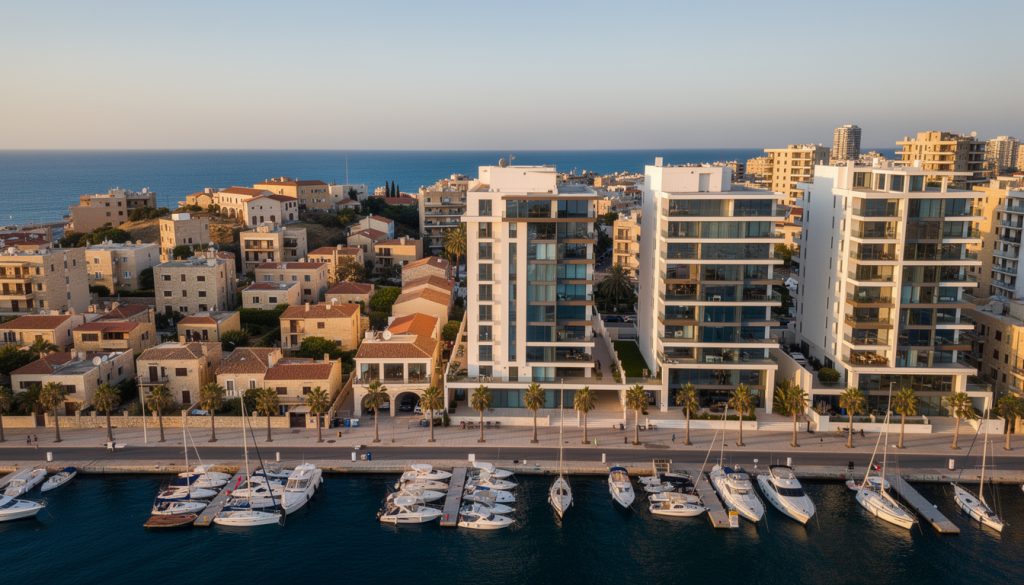
Unlocking Returns: The Best Cyprus Cities for Off-Plan Property Investment centers on Limassol, Paphos, Larnaca, Nicosia, and Ayia Napa/Protaras, each driven by distinct commercial, tourism, or domestic fundamentals. Off-plan property behaves differently from one city to the next. Evaluating the best Cyprus cities off-plan investment therefore requires comparing yield against appreciation potential, staged payment cashflows, execution risk controls, and post-completion resale liquidity.
Leading Cyprus Cities for Off-Plan Property Investment and Their Return Drivers
Limassol and Larnaca: Commercial Hubs and Coastal Infrastructure Catalysts
Limassol is the premier international business and corporate hub of Cyprus. Prime coastal land is scarce, high-end high-rise new-build developments cluster along the waterfront, and foreign buyers take a large share of purchases. PwC Cyprus data shows how transaction value concentrates in particular districts and how buyer demand is distributed across the country. That profile suits capital-preservation and luxury-sector investors.
Larnaca follows a different logic. Port and marina redevelopment is reshaping the waterfront, entry prices sit below Limassol, and the main international airport is only a few kilometers away. Value-growth investors who track infrastructure catalysts tend to favor it.
Paphos and Ayia Napa/Protaras: Tourism Demand and Resort-Led Developments
Paphos draws demand from international flight connectivity, coastal resort appeal, and year-round relocation by retirees and remote professionals. Ayia Napa and Protaras, in Famagusta district, work differently. Marina developments and beach-oriented pre-construction purchase inventory serve mainly seasonal holiday demand and lifestyle-plus-investment buyers. Resort stock within 1 to 5 km of the coastline dominates both markets. Paphos airport lies roughly 15 km from the town, while Ayia Napa and Protaras rely on Larnaca airport, about 40 to 50 km away.
Nicosia: Domestic Employment, Universities, and Year-Round Stability
Nicosia is the administrative, financial, and higher-education capital. Land is inland, and demand comes from local professionals, civil servants, and university students rather than seasonal tourists. Conservative, income-oriented investors who prefer steady occupancy over speculative coastal appreciation fit this market best.
Short-Term Holiday Lets or Long-Term Rentals: Which City Fits Which Strategy?
Long-term demand comes from corporate expatriates in Limassol, locals and students in Nicosia, and commuters in Larnaca. Short-term demand belongs to Paphos and Ayia Napa/Protaras. Seasonality risk cuts occupancy and winter cashflow in resort districts, while business and university hubs stay occupied year-round. New-build developments with thermal insulation, strong energy ratings, parking, and practical 50 to 110 square meter layouts command higher rents than older resale stock.
First-time investors usually choose 1- and 2-bedroom apartments in Larnaca or Nicosia, where tenant demand is predictable. Yield-focused investors lean toward student housing and long-let apartments in Nicosia, or managed coastal units in Paphos and Larnaca that balance rental yield and occupancy. Capital-growth investors target early projects near infrastructure zones in Larnaca or commercial corridors in Limassol, aiming at capital appreciation. Lifestyle-plus-investment buyers favor coastal villas and resort apartments in Paphos or Ayia Napa/Protaras.
What Do Realistic Returns Look Like After Every Cost?
Total return combines pre-completion capital appreciation, ongoing rental yield, financing effects where leverage applies, and a typical holding horizon of five to seven years. Official Central Bank indices for Nicosia, Limassol, Larnaca, Paphos, and Famagusta allow apartment and house price trends to be benchmarked against realistic appreciation. Gross yield vs net yield is the sharper distinction. Management fees, communal building charges, maintenance reserves, insurance, furnishing, and seasonal vacancy all reduce actual cashflow, and the gap is widest in resort cities.
Staged Payments and Full Acquisition Budget
A reservation deposit takes the unit off the market. A contract-signing tranche follows, then construction-linked payment plan milestones, with the final balance due at snagging and handover. Stage payments must be budgeted alongside transfer-related costs, legal fees, utility connections, and turnkey furnishing. Unplanned gaps erode net returns before the first tenant arrives.
Off-Plan vs Resale: Six Factors and the Timing Question
| Factor | Off-plan property | Resale unit |
|---|---|---|
| Pricing | Developer launch price | Completed-unit premium |
| Maintenance | Little immediate renovation | Renovation often needed |
| Energy efficiency | Competitive modern specifications | Frequently dated |
| Tenant appeal | High for new units | Varies with condition |
| Time to income | Lag during construction | Immediate |
| Resale positioning | Newest stock in the area | Competes with new deliveries |
In cities with aging housing stock, such as parts of Nicosia and central Larnaca, newly delivered apartments often beat older units on rentability and on liquidity and resale demand. Early launch-phase pricing usually offers the widest margin for pre-completion uplift compared with a late-stage pre-construction purchase. The signals to watch differ by city type. Business cities (Limassol, Nicosia, Larnaca) call for absorption rates, unsold inventory pipelines, and municipal infrastructure milestones. Resort hubs (Paphos, Ayia Napa/Protaras) call for tourist arrivals and seasonal booking trends.
Common Mistakes in Pre-Construction Due Diligence
The costliest error is committing funds before an independent lawyer completes the checks. A Land Registry search confirms clean ownership and reveals encumbrances and liens, such as a developer mortgage on the plot. Valid planning permits and building permits need confirmation before any pre-construction purchase is finalized. Depositing the signed contract of sale at the Lands Office, as described in Lands Office guidance, creates specific performance protection and blocks the seller from reselling or encumbering the unit while construction progresses.
Delivery Delays, Specification Changes, and Title Deeds
Stage payments tied to certified construction milestones rather than calendar dates limit exposure to delays. Detailed architectural and material schedules attached to the contract prevent specification downgrades, and a developer's completed-project record deserves scrutiny. The title deeds timeline runs separately, since individual titles follow project completion and final municipal approvals. Thorough snagging and handover inspections protect asset quality. City risks also differ. Famagusta and Paphos carry seasonality risk from reliance on peak-season bookings, while hyper-competitive luxury segments in Limassol face oversupply risk.
Exit Planning: Who Actually Buys a Newly Delivered Unit?
End buyers differ by city: international corporate buyers and affluent relocators in Limassol, domestic owner-occupiers and local investors in Nicosia, regional and European buyers in Larnaca and Paphos, and mainly holiday-home buyers in Ayia Napa/Protaras. A diverse buyer pool strengthens liquidity and resale demand and lowers holding risk when an exit strategy is executed. Strong rental performance alone does not guarantee a fast sale.
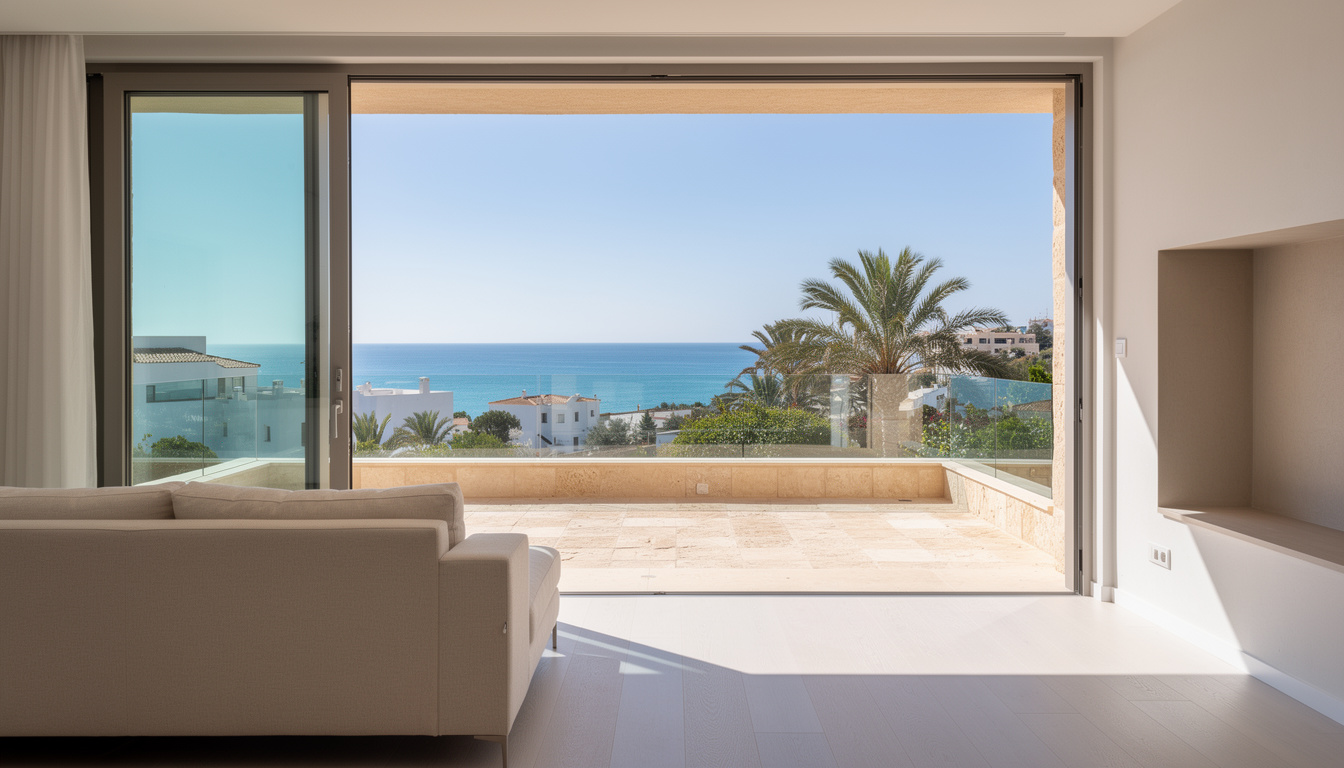
Two exit paths dominate. One is selling shortly after completion, when visual inspection eases buyer hesitation. The other is holding until separate title deeds are issued and proven rental history supports valuation. Clear documentation and completed title status widen the pool of mortgage-financed local buyers, which improves exit pricing and capital appreciation realization.
Which city suits first-time off-plan investors?
Larnaca and Nicosia are the usual starting points. Both offer lower-priced 1- and 2-bedroom apartments and steadier year-round tenant demand than resort areas.
How are buyers protected when paying in stages?
Payments linked to certified construction milestones, a lawyer-led Land Registry search, and a contract deposited at the Lands Office together reduce exposure to delays and double-selling.
Does off-plan always outperform resale?
Not automatically. Off-plan offers launch pricing and modern specifications, but income starts only after completion, and results depend on city demand and execution quality.
About the Business
Abuda Property Investment is an off-plan property investment platform connecting international investors with exclusive pre-sale residential properties in Cyprus and Berlin, offered directly at developer launch prices. The platform simplifies the investment process for those seeking early access to real estate opportunities in high-growth markets.